
Since 2020, numerous organizations have implemented AI-based strategies to scale their content creation efforts. And in many ways, this has been successful. Organizations that were previously limited to publishing only two blog articles per month have now scaled up to twenty. Many software-as-a-service (SaaS) firms have generated dozens of SEO-based pages to populate their websites. Additionally, LinkedIn is flooded with “thought-leader” based content created with the assistance of AI. Marketing teams have reported both increased productivity and reduced costs.
However, in 2026, a new trend began developing; a greater percentage of organizations are finding that producing more content does not always lead to additional visibility. Instead, in some instances, it may actually reduce visibility.
The Problem is Not With AI – But Rather Sameness
The problem with AI-generated content is not that search engines hate AI-generated content. The problem is that so much of today’s AI-generated content is virtually indistinguishable from one another. The structure of all the articles is similar. The wording is similar. The same set of recycled “insights” are referenced. The same “ultimate guide” format has been used hundreds of times. As more organizations begin relying on AI-generated drafts without incorporating any expertise, perspective, or originality into their work, the Internet is rapidly filling with content that is technically accurate but lacks substance and, therefore, value. Users are starting to recognize this lack of value. So too do search engines.
Search Behavior Has Changed
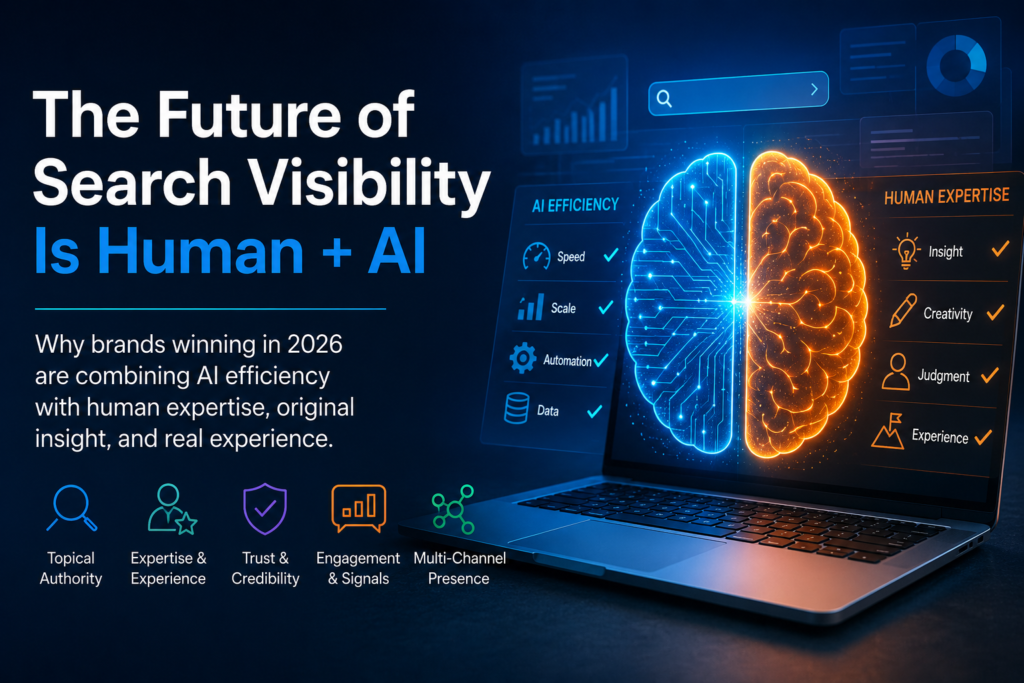
Traditionally, SEO was centered around optimizing key phrases. However, in 2026, search behaviors look vastly different. Today, the visibility of your organization relies upon a diverse set of signals, including:
- Topical authority
- Firsthand expertise
- Quality engagement
- Credibility associated with your brand
- User trust
- Entity recognition
- Originality of your content
- Behavioral signals
- Citations and references
- Multi-channel presence
Additionally, AI-based answer engines are dramatically altering how information is displayed. Instead of only ranking webpages, these platforms increasingly display data summaries directly to end users. Therefore, generic and interchangeable content will significantly reduce the likelihood of becoming a reference-worthy source.
In other words, if your content does not provide a unique addition to the existing body of knowledge, it will cease to exist.
The Emergence of “Editorialized AI”
While many organizations continue to use AI-generated content effectively, none use AI as their sole method of generating content. Each of these organizations combines:
- Efficiency provided by AI
- Subject-matter expertise
- Editorial decision-making
- Clear positioning
- Human insight
- Unique experience
This is the direction that the industry will take.
Not away from AI.
Away from unfiltered AI output.
Effective content teams in 2026 view AI as a way to accelerate their production capabilities, rather than as a replacement for their ability to think strategically.
AI can assist:
- Organizing ideas
- Speeding up outline generation
- Summarizing research
- Improving workflow processes
- Repurposing existing content
- Creating initial drafts
Human expertise however, produces:
- Differentiated opinions
- Meaningful insights
- Trustworthiness
- Storytelling
- Nuanced analysis
- Emotional connection with your audience
- Trust within your audience
That combination of elements has never been more important.
Authentic Expertise Will Continue to Be Valued
Ironically, the widespread adoption of AI as a content-generation tool will make authentic expertise more desirable.
With the proliferation of generic content flooding the marketplace, audiences are beginning to seek out:
- Founder-led content
- Practitioner insights
- Operator viewpoints
- Case-study driven writing
- Experience-based opinions
- Technical depth
- Transparent lessons learned
One reason founder-led LinkedIn content continues to outperform many corporate brand pages is that people want perspective, not simply information. Perspective is extremely difficult to replicate with automation.
Why Some Organizations Are Experiencing a Decline in Traffic Despite Generating More Content
Numerous organizations believe that declines in traffic indicate that they require more content.
But volume is no longer the primary factor for differentiation.
Aggressive AI-based publishing methods create multiple issues for organizations:
- Cannibalization of content
- Low levels of engagement
- Decrease in trust signals
- Lower average quality of content
- Shallow topical coverage
- Diluted branding
- Repetitive messaging
There are many websites today filled with hundreds of pages that technically target key phrases but contain minimal actual value. This leads to low engagement, low conversion rates, and reduced stability in search engine visibility.
More content will only increase visibility when it offers true value, uniqueness, and credibility.
The Future Will Belong To Hybrid Content Teams
Hybrid models combining AI-assisted production with human editing/technical expertise/strong brand positioning/multi-channel distribution/user-centric storytelling are expected to dominate future content marketing strategies. These hybrid models are already emerging in various forms across B2B SaaS/Cybersecurity/AI/Enterprise Tech/Finance/Developer-Focused companies.
Organizations that are transitioning quickest understand an important distinction:
AI enables efficiency.
Expertise generates authority.
Authority is quickly becoming one of the most valuable resources available in digital marketing.
Final Thoughts
The content marketing discussion in 2026 is no longer about whether or not to use AI.
That debate is over.
The next question is:
What are you bringing to the table that AI alone cannot?
Brands that will continue to achieve visibility are not simply producing more content faster. They are producing more effective content that incorporates stronger ideas/clearer positioning/deeper expertise/human perspective.